
EFT & Matrix Reimprinting
Emotional Freedom Techniques (EFT) commonly known as Tapping, is a gentle yet powerful approach that helps calm the nervous system and create new pathways in the brain. Many of us carry emotional imprints from past experiences that continue to influence our thoughts, feelings, behaviours, and decisions without us even realising it.
Have you ever reacted more strongly than a situation seemed to warrant? Felt stuck in patterns you can't explain? Or found yourself held back by self-doubt, fear, or beliefs that you're not good enough? These responses are often connected to unresolved experiences stored in the subconscious mind.
EFT helps reduce the emotional charge attached to these experiences, allowing you to respond differently in the present. Matrix Reimprinting takes this process a step further by helping transform the memories and beliefs formed during significant life events.
Together, these techniques help uncover and release limiting beliefs, build emotional resilience, and create new possibilities so you can move forward with greater confidence, freedom, and ease.
Did you know many of the challenges you face today may be linked to experiences from your past?

Did you know many of the challenges you face today may be linked to experiences from your past?
Where did EFT originate?

Where did EFT originate?
In the 1980s, psychologist Dr. Roger Callahan was working with a client who had an intense fear of water. After many months of traditional therapy with little change, he became curious about the connection between emotions and the body's energy system.
While exploring this approach, he asked his client to tap on specific acupuncture points while focusing on her fear. To his surprise, the emotional intensity reduced significantly.
This discovery led to further development and research, eventually evolving into what is now known as Emotional Freedom Techniques (EFT) or Tapping, a method used worldwide to help people release emotional blocks, reduce stress, and create positive change.
The Science Behind EFT
In the 1990s, Gary Craig developed Emotional Freedom Techniques (EFT) after studying the work of Dr. Roger Callahan and Thought Field Therapy (TFT), one of the early approaches in the field of Energy Psychology. Craig simplified the process, making it easier to learn and apply while maintaining its effectiveness.
Since then, EFT has continued to evolve through research, clinical practice, and practitioner experience around the world. A growing body of studies has explored the impact of EFT on stress, anxiety, emotional wellbeing, and nervous system regulation, with findings published in a range of peer-reviewed journals.
Today, EFT is used by practitioners, educators, health professionals, and individuals seeking practical tools to reduce emotional distress, release limiting beliefs, and create positive change in their lives.
The Science Behind EFT
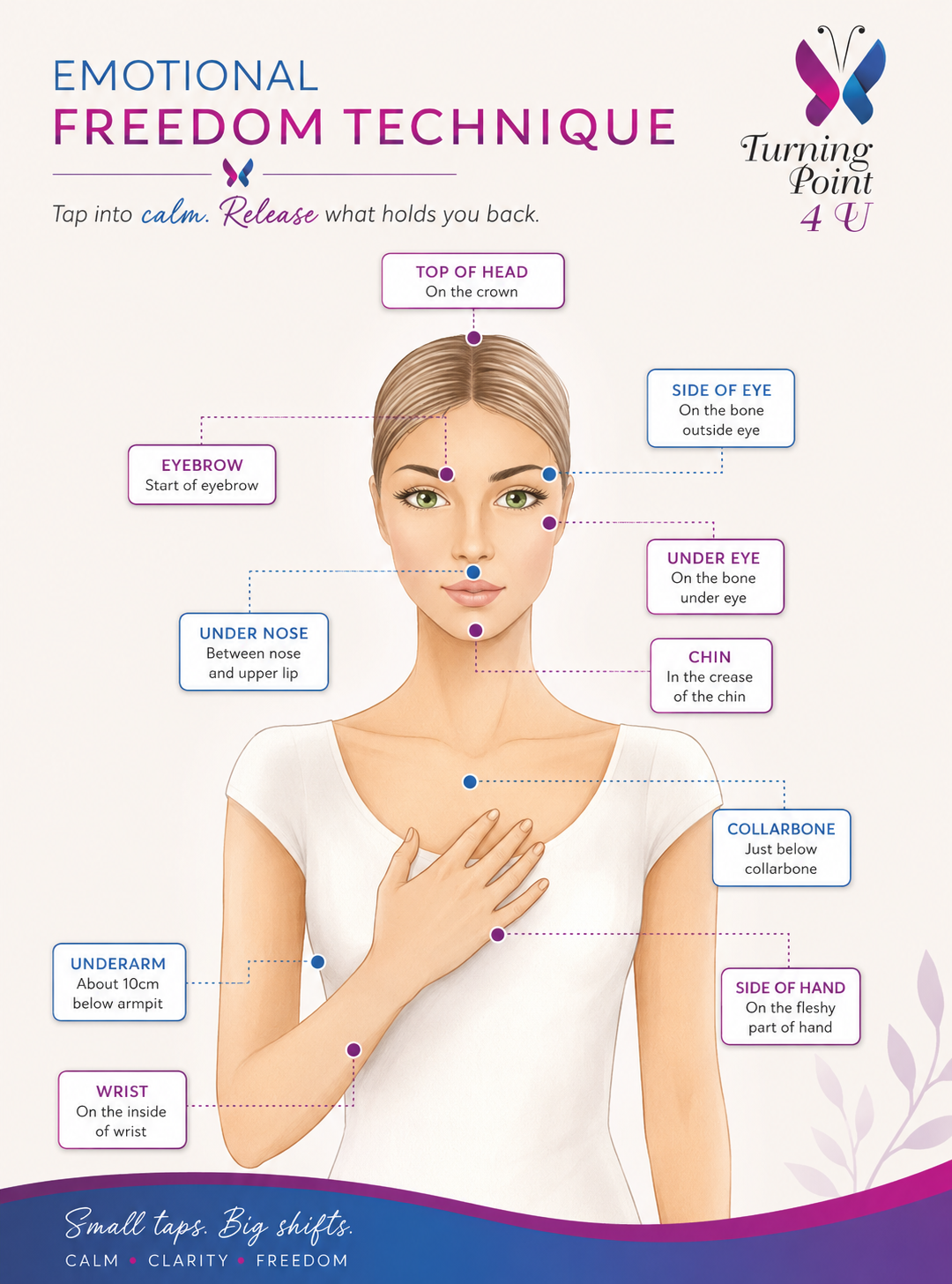
Research and Evidence

Research and Evidence
A growing body of research has explored the use of Emotional Freedom Techniques (EFT) for a range of emotional and wellbeing challenges, including:
- Stress and anxiety
- Trauma and PTSD
- Fears and phobias
- Limiting beliefs and self-confidence
- Emotional overwhelm
- Performance and success blocks
- Cravings and unwanted habits
- Physical discomfort associated with emotional stress
Research into EFT continues to expand, with studies conducted by universities, researchers, and practitioners around the world. The findings suggest EFT may help regulate the nervous system, reduce emotional intensity, and support positive change in both thoughts and behaviours.
While EFT is not intended to replace medical or psychological treatment, many people find it to be a valuable complementary approach to their overall wellbeing.
There is relief with EFT
Do you struggle with anxiety, stress, self-doubt, emotional overwhelm, or find yourself reacting to situations more intensely than you would like? Perhaps you feel held back by limiting beliefs, recurring patterns, or experiences from the past that continue to influence your life today.
EFT and Matrix Reimprinting can help uncover and release these underlying emotional influences, creating greater calm, clarity, confidence, and freedom to move forward.
Matrix Reimprinting
“There is a way to reconnect with and heal your younger self in a safe, caring, and supportive way.”
Many of the beliefs and emotional patterns we carry today can be linked to experiences from our earlier years. You do not need to come from an abusive background for these experiences to have a lasting impact.
Incidents such as bullying, criticism, rejection, or hurtful words from friends, teachers, or family members may still influence how you respond today. If you find yourself reacting in ways you do not understand, Matrix Reimprinting can help uncover the root cause and create a new way forward.
Matrix Reimprinting


If we face our fears and transform the limiting beliefs that are holding us back, we can change the direction of our lives.
These beliefs often develop from past experiences and can prevent us from living with confidence, freedom, and fulfilment. Don't you deserve that?
Matrix Reimprinting is a gentle and supportive technique that helps people connect with the experiences and beliefs that may still be influencing them today. By transforming these emotional imprints, it creates the opportunity for lasting change and a new way forward.

“EFT offers great healing benefits” - Deepak Chopra MD
Scientific Evidence and Clinical Research:
A growing body of research continues to explore the effectiveness of EFT in supporting emotional wellbeing, stress reduction, and nervous system regulation.
The Science of Tapping: The Current State of Scientific Evidence provides an overview of published studies examining the impact of EFT on a range of emotional and wellbeing challenges.
Bond University continues to conduct and contribute to clinical research into EFT, adding to the growing evidence base supporting its use as a complementary approach to wellbeing.
Are your limiting beliefs holding you back?
Book a session with Turning Point 4 U and change your life… you deserve it!
What's Really Going On Beneath Behaviour?
Professional Development for Educators, School Leaders & Learning Communities
Early Learning • Schools • TAFE • Universities
Understanding what lies beneath behaviour can improve emotional regulation, engagement, learning, and wellbeing. Developing these skills helps students and educators recognise emotions, respond more effectively to challenges, and build stronger learning environments.
When educators understand the hidden moments influencing behaviour, they are better equipped to reduce escalation, strengthen relationships, and improve learning outcomes. These practical insights can be applied across a variety of educational settings.
As an educator and former teacher, Tracey is passionate about supporting teachers, students, and school communities to create calmer, more connected environments where everyone has the opportunity to succeed.


Understanding what was happening beneath the behaviour changed the outcome.
Often, students and teachers bring experiences, emotions, and pressures into the classroom that have little to do with what is happening in the moment."
Through her experience as a parent, educator, and practitioner, Tracey has seen firsthand how hidden influences can affect behaviour, learning, and wellbeing. This understanding became especially important while supporting her son, who was diagnosed with severe ADHD.
By helping him recognise what was happening before emotions escalated, and by working collaboratively with his teachers, new strategies emerged that supported calmer responses, stronger relationships, and better outcomes during challenging situations
Are you ready to explore a different way of understanding behaviour, wellbeing, and learning within your school community?
Discover how recognising the hidden moments beneath behaviour can help create calmer classrooms, stronger relationships, improved engagement, and better outcomes for students, staff, and families.
The problem wasn't the maths.
Tracey loves witnessing the moment when someone begins to see things differently. It reminds her of her teaching days, helping students discover strengths they didn't realise they had.
As a relief teacher, she was often called into classes across a range of subjects. One day, she was supporting a student named Johnny in a maths lesson.
"I don't get it, and my teacher knows that," Johnny said.
What Tracey noticed wasn't the maths problem. It was the belief sitting underneath it.
Johnny had already decided he couldn't do maths.
Although she wasn't a maths teacher, Tracey believed Johnny was capable of more than he realised. She asked if he would be willing to try a different approach. At first, he hesitated, but eventually agreed.
Together, they worked through the problem from a new perspective.
A few minutes later, Johnny looked up and shouted, "I got it!"
The breakthrough wasn't just that he solved the problem. It was that he discovered he could.
In that moment, Johnny's confidence began to shift. What had felt impossible only moments earlier suddenly became achievable.
Why This Matters
Often, the challenge we see on the surface isn't the real obstacle.
Whether in learning, behaviour, relationships, or life, there is often something sitting beneath the visible struggle—a belief, experience, fear, or story that has quietly shaped what feels possible.
When we recognise and address what is happening underneath, new possibilities emerge. Confidence grows, learning improves, and outcomes can change in powerful ways.

Workshops, Presentations
& Professional Development
Understanding What Lies Beneath Behaviour
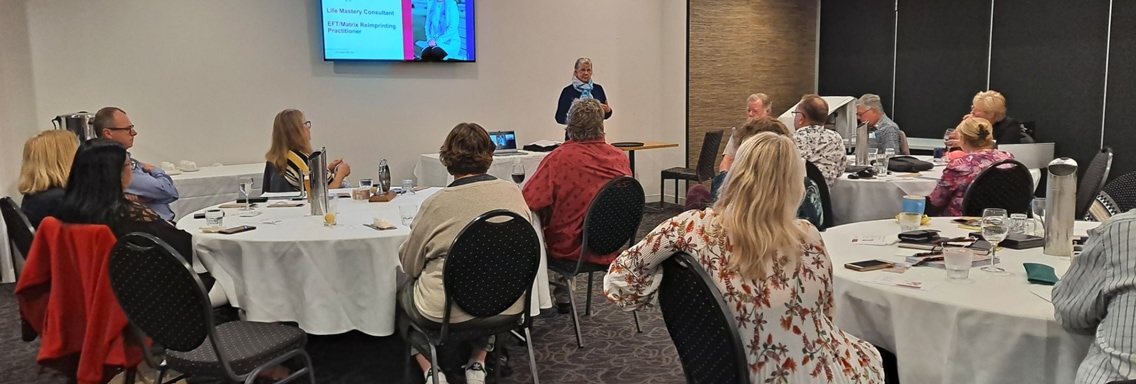
If your school, organisation, or community group is looking to better understand behaviour, wellbeing, engagement, and human potential, Tracey can tailor a presentation, workshop, or professional development session to meet your needs.
Drawing on her unique 360-degree perspective as a parent, student, educator, practitioner, author, and speaker, Tracey helps people recognise the hidden moments that influence behaviour, emotions, decision-making, and outcomes.
Through practical frameworks, real-life stories, and evidence-informed approaches, participants gain new insights, practical strategies, and a deeper understanding of what may be happening beneath the surface.
Topics May Include:
- What's Really Going On Beneath Behaviour?
- Understanding the Hidden Moment
- Emotional Regulation & Wellbeing
- ADHD Through a Different Lens
- Parent, Teacher & Student Perspectives
- Building Stronger Connections
- Resilience & Overcoming Adversity
- Making the Invisible Visible
Tracey Walker is available for presentations, workshops, mentoring, and professional development for schools, community organisations, and businesses.
Let's explore what is possible for your community.
Client Testimonials
FAQs
- What is the Hidden Moment?
The Hidden Moment is the point before behaviour becomes visible. It is often where emotions, stress, unmet needs, past experiences, or nervous system responses begin influencing a person's reactions, choices, and actions.
- Why is understanding behaviour important?
Behaviour is often the visible outcome of something happening beneath the surface. Understanding what may be influencing behaviour can help educators respond more effectively, strengthen relationships, and improve learning outcomes.
- How can this support teachers and educators?
Understanding the hidden influences behind behaviour can help educators reduce escalation, build stronger classroom connections, improve student engagement, and create calmer learning environments.
- What types of challenges does this approach support?
This approach can support a wide range of educational challenges including behaviour incidents, emotional regulation, student disengagement, anxiety, ADHD, relationship difficulties, teacher wellbeing, and classroom culture.
- How is this different from traditional behaviour management?
Matrix Reimprinting can help uncover and transform limiting beliefs, emotional patterns, and unresolved experiences that may contribute to anxiety, low self-esteem, fears, recurring challenges, and emotional distress.
- What are the benefits for schools?
Benefits may include improved relationships, greater emotional awareness, reduced reactive responses, increased engagement, stronger wellbeing outcomes, and a more connected school community.